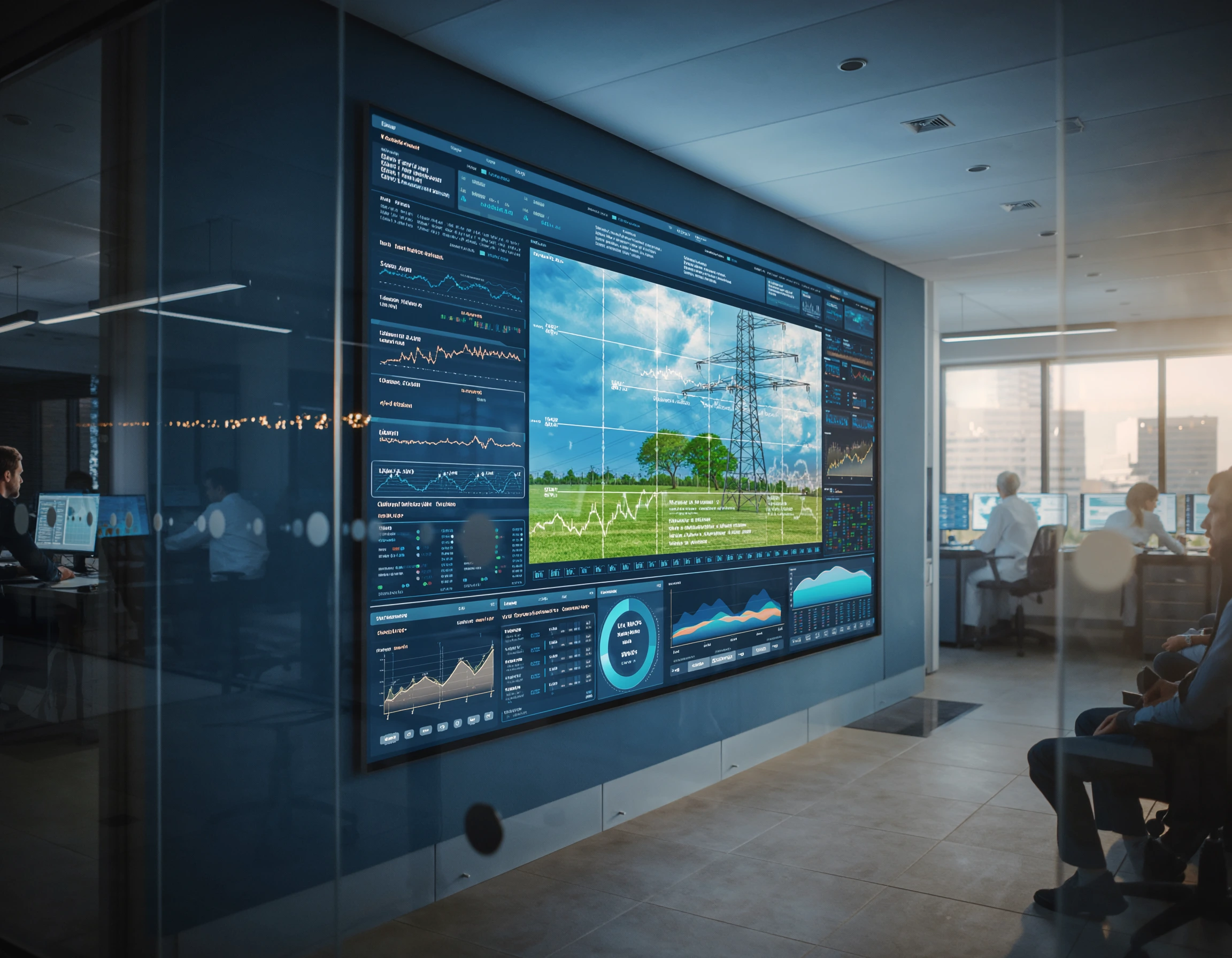
Digital Twins in Energy Sector: From Reactive Maintenance to Predictive Control
The energy grid as we know it is a 20th-century marvel trying to solve a 21st-century problem. It's a rigid, centralized system now being flooded by decentralized, intermittent renewables like wind and solar. Relying on static spreadsheets and historical data to balance this new, complex equation is a recipe for instability and inefficiency.
Operators need a way to see what's happening right now and, more importantly, what's about to happen next. This is precisely the problem the digital twin in the energy industry is built to solve.
This technology is powered by IoT energy management, where thousands of sensors on turbines, panels, and transformers stream real-time data to the digital twin. This allows for continuous virtual monitoring on a level that was impossible before.
Read Also: Digital Twin Cybersecurity: How to Protect Your Virtual Copy
Benefits of Digital Twins for Predictive Maintenance in Energy Assets
- The real value of a digital twin for power plants is that it provides a risk-free digital sandbox. Instead of making high-stakes changes to a live facility, engineers can run "what-if" scenarios, testing new fuel blends or simulating the stress of a sudden ramp-up to find peak efficiency.
- Another major win is true predictive maintenance. For example, a twin can learn the unique operational "heartbeat" of a generator. It can detect a microscopic change in vibration that signals a future failure, allowing maintenance to be scheduled before the asset breaks. This proactive approach is a massive cost-saver.
- Digital twins for predictive maintenance also help in integrating renewables. A smart grid digital twin models the whole system, predicts renewable output from weather data, and simulates the best way to balance supply and demand in real-time. In short, the digital twin is the "brain" that makes a modern, green, and resilient power system possible.
Click here to learn more about industrial digital twins and their application.
Frequently Asked Questions
What is a digital twin in the energy sector?
A digital twin in the energy sector is a dynamic, virtual replica of a physical asset, like a wind farm, a power plant, or an entire grid. It's continuously updated with real-time data to simulate, predict, and optimize the asset's performance and health.
How do digital twins help improve power plant efficiency?
A digital twin for power plants (a virtual energy plant) allows operators to run simulations. They can test how different fuel mixtures, operational settings, or maintenance schedules will affect output—all in a virtual environment. This lets them find the most efficient way to run the plant without any real-world risk.
How do digital twins support renewable energy integration?
Renewables like wind and solar are intermittent. A digital twin of the smart grid can model this entire complex system. It uses real-time weather data to forecast renewable output, then simulates the best way to balance the grid—deciding when to store energy, when to pull from a virtual energy plant, or when to manage demand.
What is a smart grid digital twin?
A smart grid digital twin is a specific type of twin that models the entire, interconnected power grid, rather than just one plant. It includes transmission lines, substations, and energy sources (including renewables) to simulate and manage the stability, flow, and resilience of the whole network.
Can digital twins reduce operational costs in energy companies?
Yes, significantly. They reduce costs in three main ways:
- Enabling predictive maintenance, which cuts costs from unplanned downtime.
- Optimizing plant efficiency, which reduces fuel and operational waste.
- Improving grid balancing, which prevents costly over-production or emergency purchases of energy.
What role does IoT play in digital twin applications for energy?
IoT energy management is the foundation of the digital twin. The thousands of IoT sensors on turbines, transformers, and panels are the "nerves" of the system. They provide the constant, real-time data stream (for virtual monitoring) that keeps the digital twin "alive" and perfectly synced with its physical counterpart.